Mum Interrupted
Postcards from a Perfect Life
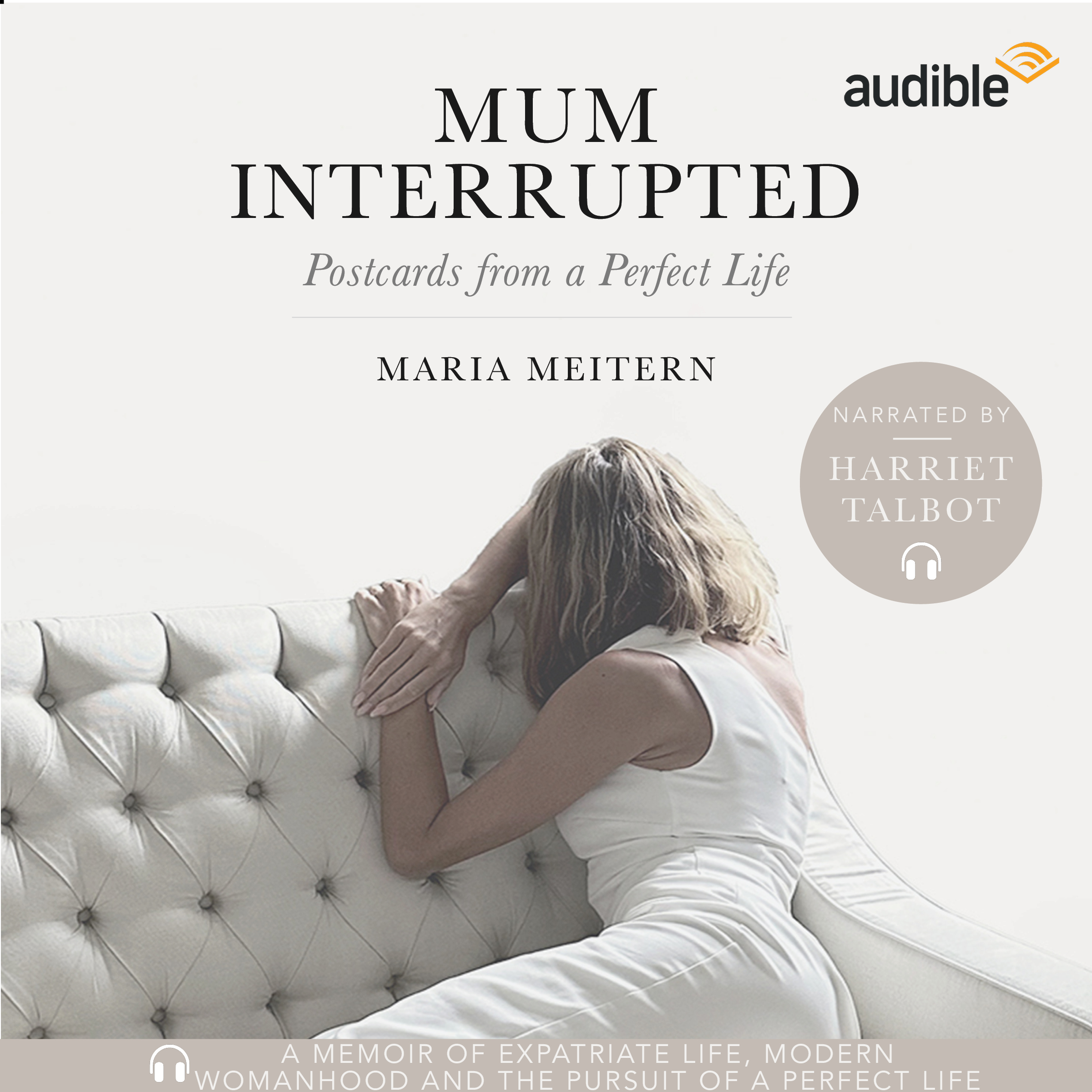
Unabridged audiobook, narrated by Harriet Talbot. Listen on Audible →
A note to the readerThis book touches on anxiety, depression, disordered eating, and the silent weight of perfection. Within a life that appears successful, such struggles are often harder to recognise. Some moments may feel heavy. You may pause or move past. The story will wait.
While filling in my youngest daughter’s yearbook before she changed schools, I paused at a new field on the form.
Nationality.
I stared at the blank line longer than necessary.
Technically she has three. In practice, perhaps five.
I wondered whether I should list them all.
I also wondered why her classmates, after seven years together, would suddenly need to know. The question looked harmless enough. For most people, it probably is.
Forms have a way of doing that, asking simple questions that become surprisingly complicated the moment you try to answer them honestly. It reminded me of the two other questions that always make me hesitate.
Where are you from?
What do you do?
Both come up early in conversation, offered politely, as if they help place you on the map. Most of us answer without thinking, but I’m never quite sure which version to give. The short one, the accurate one, or the one that requires the fewest follow-up questions.
The second question is worse.
For years I had an answer ready. Titles are efficient to close gaps and make introductions easy. My current one, mother, doesn’t. It carries weight but little status. It doesn’t move so easily across rooms.
It’s a perfectly respectable role, yet rarely sounds impressive when placed beside my husband’s title or the careers of friends. Managing directors, bankers, lawyers, doctors, partners, founders. Women who seem to move through the visible world of achievement with fluency. Some of them mothers, too.
I tell myself the comparison is irrational. But it’s sticky and remains. Perhaps I’m simply less impressive.
Then another thought follows.
Why do we ask these questions at all?
Why not ask how someone is today? Or what they ate for breakfast? Or the last time they whitened their teeth?
Somewhere between nationality and profession, we try to locate one another. Yet the more I move between countries and social circles, the less those coordinates convince.
I began to notice another division, less formal but equally persistent. We seem to fall into two groups. Those who accumulate things, and those who have opinions about them. The first speaks in logistics, acquisitions, and upgrades. The second prefers philosophy and ethics. I move between both, belonging fully to neither. It’s a crude observation, perhaps even an unfair one.
There was no clear point that led to this book, only a sense that something beneath an otherwise orderly life had begun to loosen. I didn’t begin with an arc in mind. I wrote because I needed to, often in exhaustion, during days that left no visible trace. Writing became a way to stop carrying everything in my head. Or perhaps it was a faint dissatisfaction, the sense that once titles, status, and their comforts come and go, more fundamental questions remain and refuse to budge. Questions about identity, belonging, and what, if anything, stays constant across change.
The narrative moves between voices. Some chapters are written in the third person because certain things can only be approached sideways. She is me. She is also anyone who has learned to watch herself from a distance. The first person looks back. The third looks inward. Both are true.
We tend to measure life through visible events, like births, weddings, promotions, or losses. But much of what shapes us happens offstage, in the roles we learn to perform and the parts of ourselves we edit out because they don’t fit the room. A bright day that unsettles us, or a quiet one that restores something we cannot quite name. Over time, the version that fits becomes the one that remains.
The yearbook didn’t ask about my daughter’s belonging, and I’m still unsure how to answer that question for myself, or what, exactly, the answer would need to hold.
The prologue ends here.
The book carries on.
© 2026 Maria Meitern. Published by White Room Press, London.